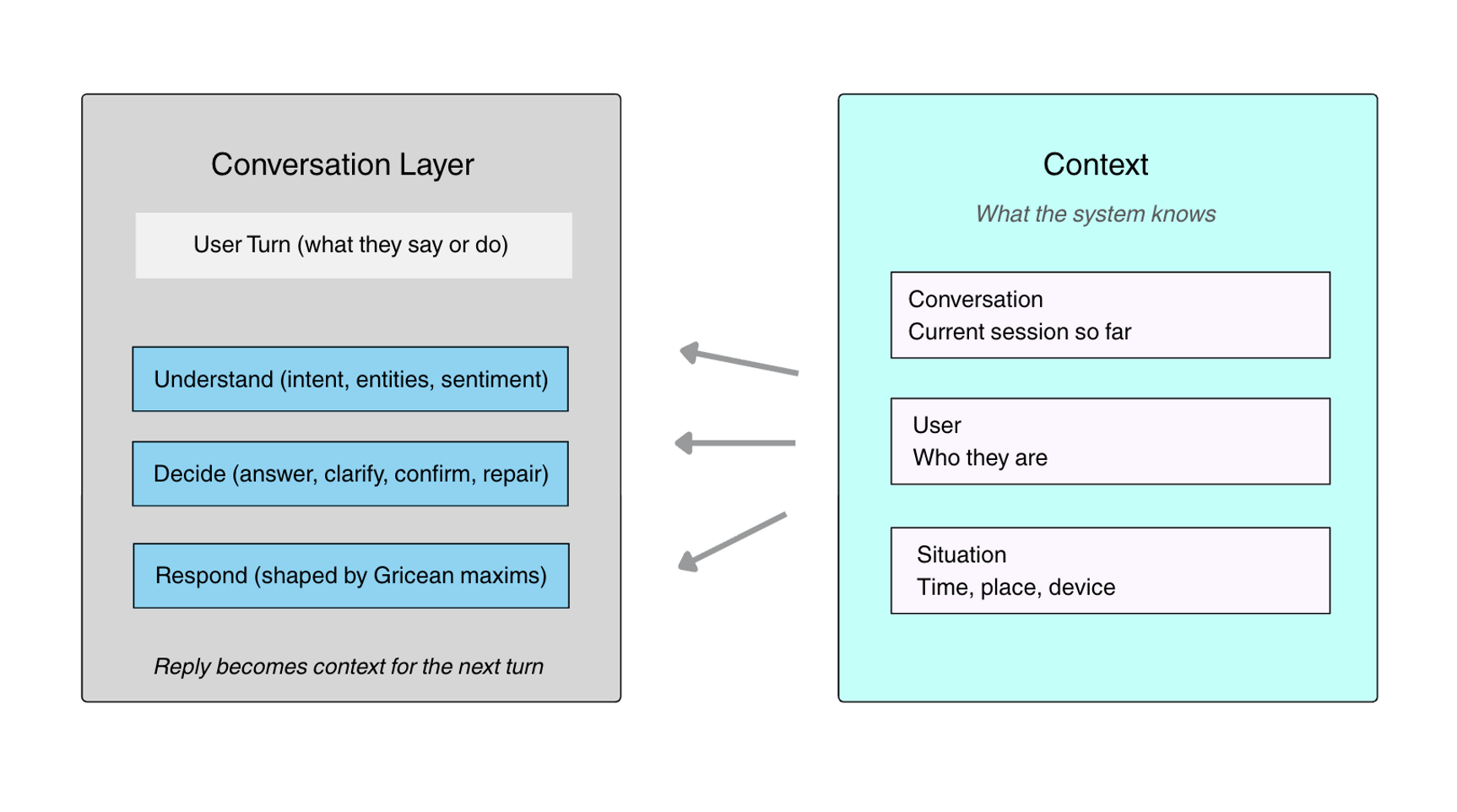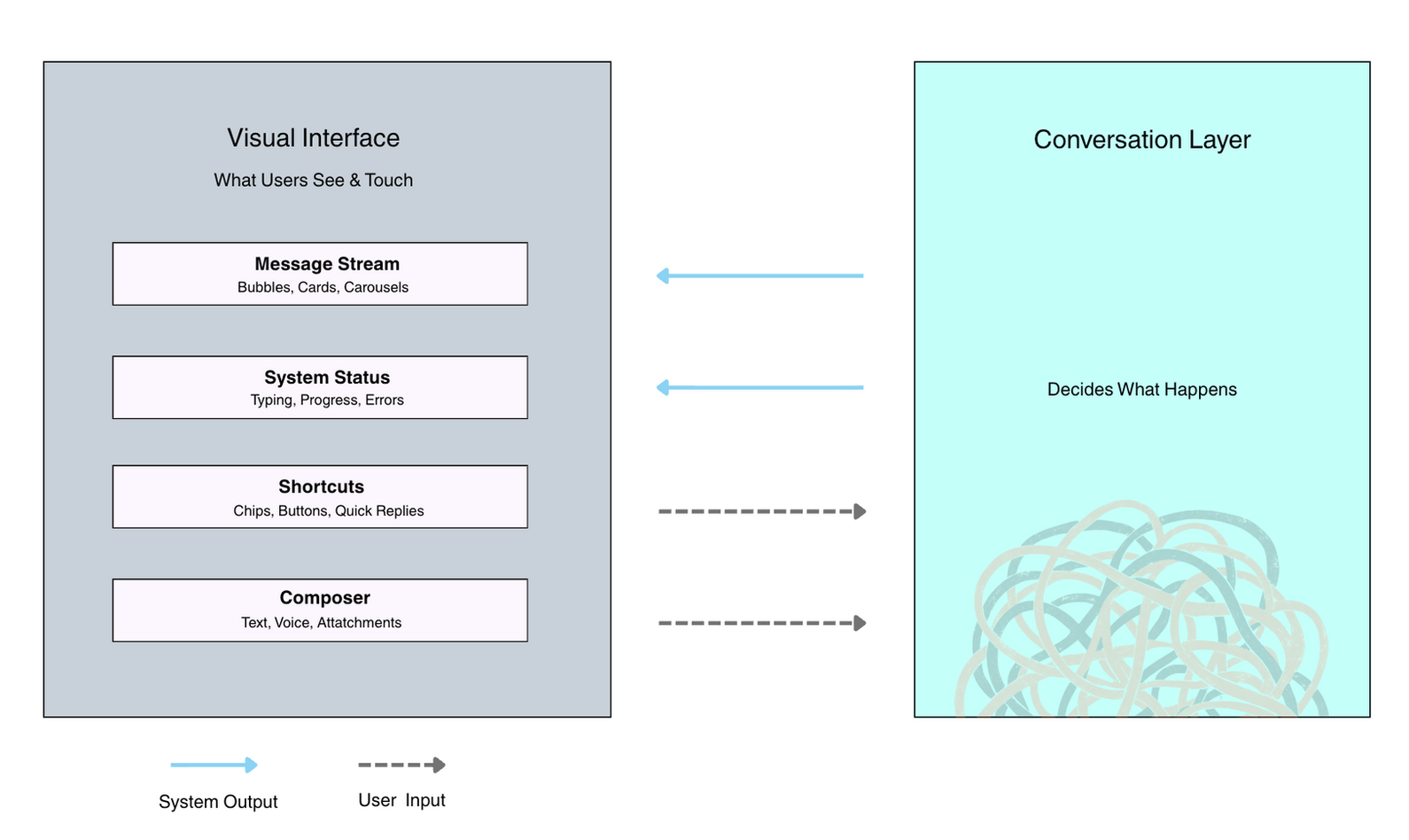
Conversational design rarely exists in a voice-only or text-only vacuum.
The real design question is always:
What belongs in the conversation, and what belongs in the visual?
Understanding Conversational Design
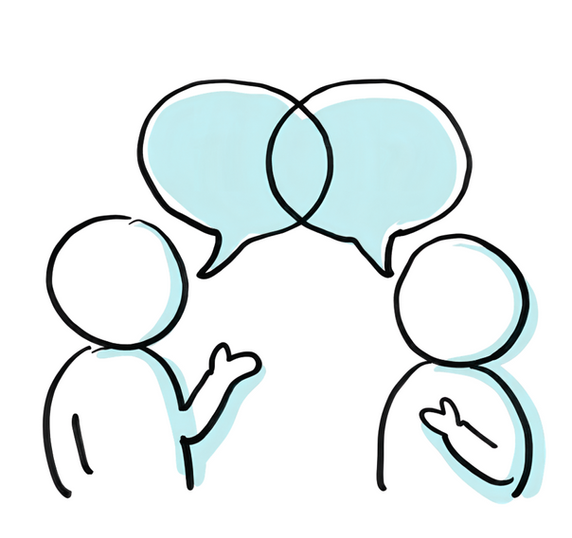

The Cooperation Model
Conversations work because 2 parties agree to follow implicit rules.
Linguists call these Gricean maxims.
These are unspoken social contracts that make dialogue feel natural and productive.
Be Relevant
Be Clear
Don't Overshare
Be Truthful
Turn Design VS. Flow Design
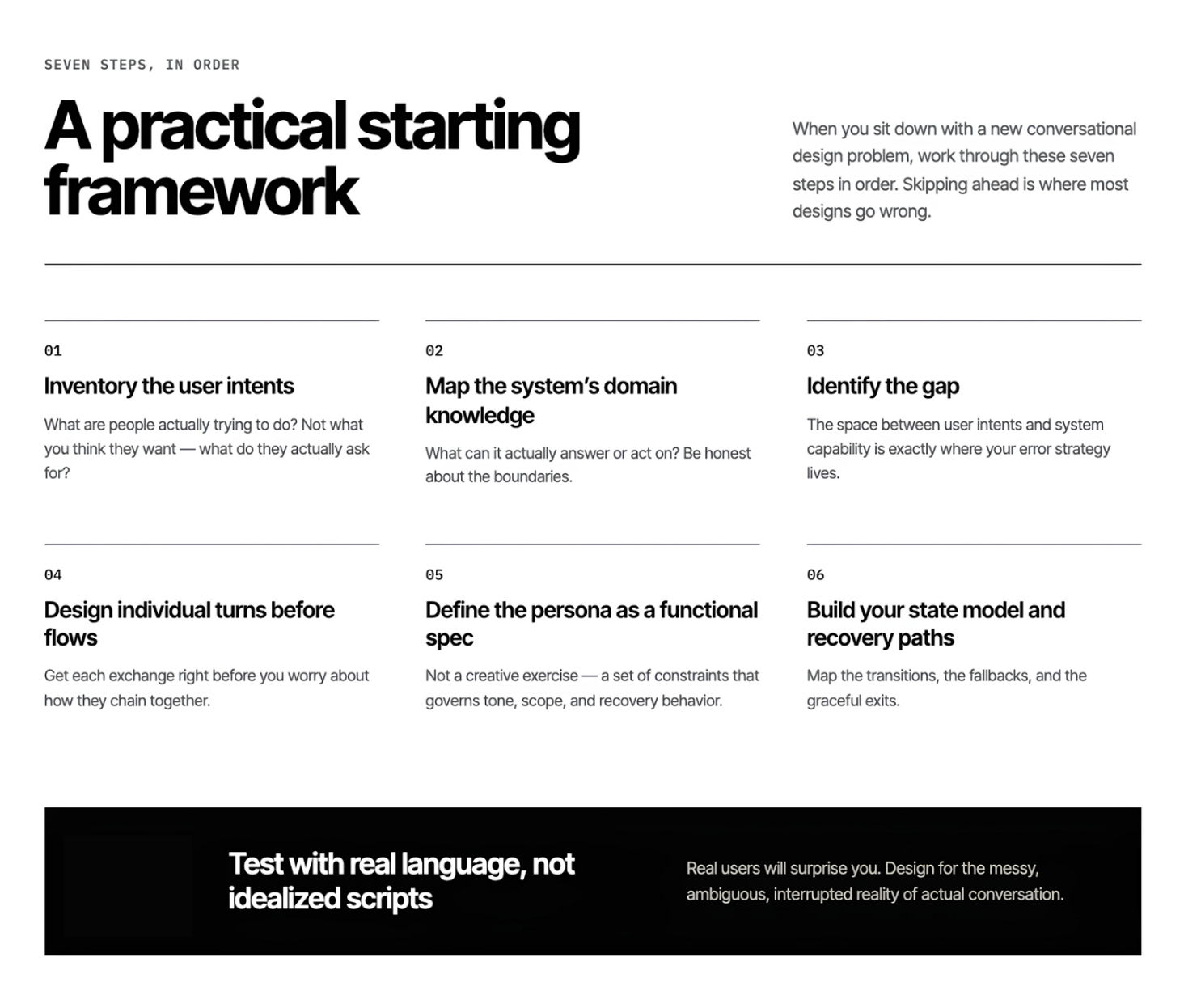
A better order of operations than mapping out dialogue flows
Start with individual Turns
What does the system say?
How does it say it?
What does it expect back?

Zoom out to Flows
This is the state machine layer.
How do turns chain together?

Stress Test
Where does the sequence break?
What happens at the edges of each sequence?

Error & Repair as a First-Class Concern
30-40%
Of Conversational Turns involve some form of repair, clarification, or renegotiation in real human dialogue.


Where the Work Actually Lives
Designing the "happy path" dialogue is a third of the work.
The rest is everything else:
What happens when the system doesn't understand the user's input?
What happens when the user changes their mind mid-task?
What happens when context shifts unexpectedly?
What happens when confidence is low on the system's end?
Persona & Register
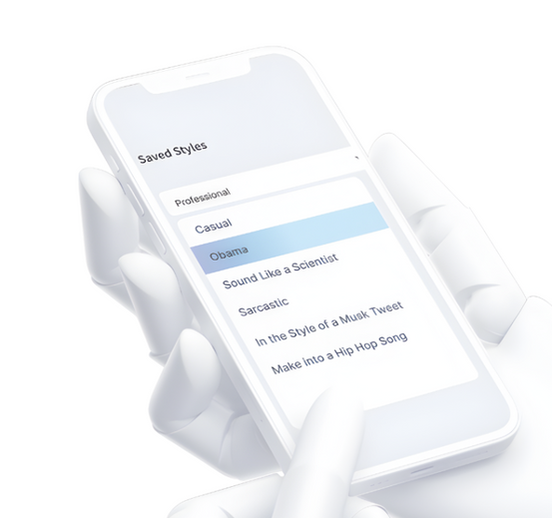
A system’s vocal identity is more than just branding; it is a functional choice that defines user expectations of capability. Misaligning these elements is the quickest way to erode user trust.
Casual, Friendly Tone
This approach suggests flexibility and forgiveness. It leads users to expect a system that handles ambiguity well, recovers gracefully from errors, and tolerates vague inputs.
Clinical, Precise Tone
This style implies high reliability within a focused scope. Users anticipate exactness and consistency, generally accepting that the system operates within strict technical boundaries.
Consistency Matters
Discrepancies between tone and actual ability fracture trust. A neighborly persona that fails to process follow-up inquiries feels dishonest, while a sterile, clinical voice attempting casual banter feels jarringly uncanny.
Multimodal Awareness